Tuesday, October 03, 2006

more on Islam

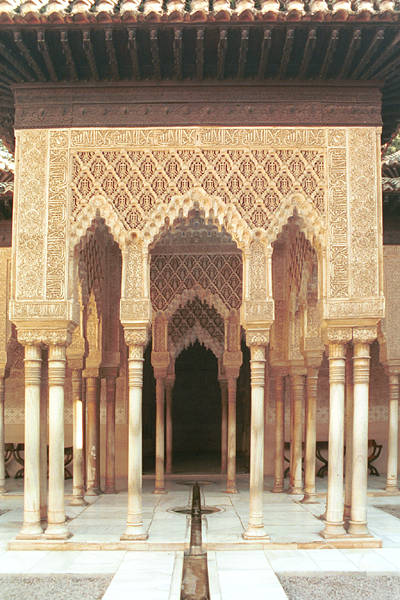
The Courtyard of the Lions in the Alhambra, Granada, Spain.

I have to admit, I'm somewhat tired of insisting on the fact that the one billion + Muslims in the world are not all bloodthirsty fanatic savages bent on our destruction, so I'm just passing on a couple of links in honor of the holy month of Ramadan.

Via Chris at Even the Devils Believe, a beliefnet story on how a Florida Muslim organization collected funds to help rebuild Palestinian churches that were damaged after the pope's remarks. The leader of the group said "these churches were protected under Islam. We were upset to see them attacked."

Beliefnet.com has a number of good articles for people who want to learn about Islam. Here's one about the concept of jihad.

Speaking of Faith has done a great program that includes interviews with several Muslims since 9/11:
Mr. Omid Safi: You still hear from a lot of people, why aren't the moderate Muslims speaking out? And, you know, at some level, you just — you feel like, you know, I've lost my voice from speaking out.

Ms. Leila Ahmed (from "Muslim Women and Other Misunderstandings"): I get constantly called and asked to explain why Islam oppresses women. I have never yet been asked, why is it that Islam has produced seven women prime ministers or heads of state, and Europe only two or three or whatever it is?

Mr. Vincent Cornell (from "Violence and Crisis in Islam"): We're faced with this crisis where we have now become the problem, you know, capital T, capital P. The microscope is focused on us, and we are now forced to take stock of what we as a community have done to ourselves.
The current Speaking of Faith, by the way, is very good, although off-topic for this post. I recommend checking it out as well. Have a blessed Ramadan, everyone.

Friday, September 29, 2006

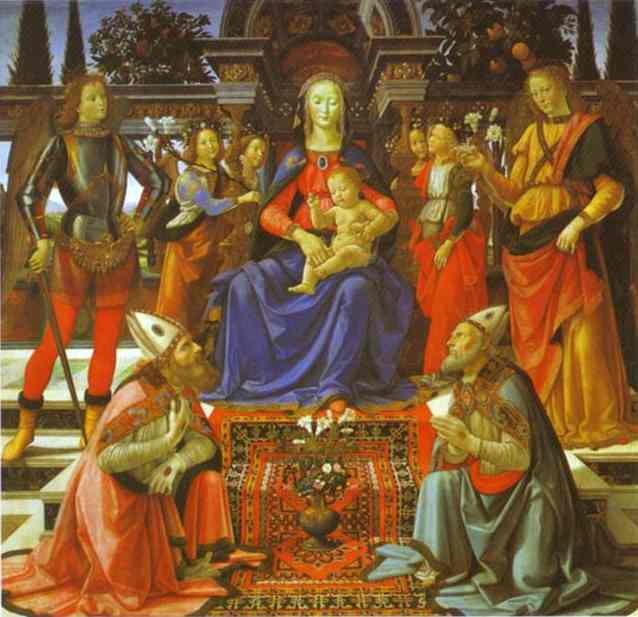
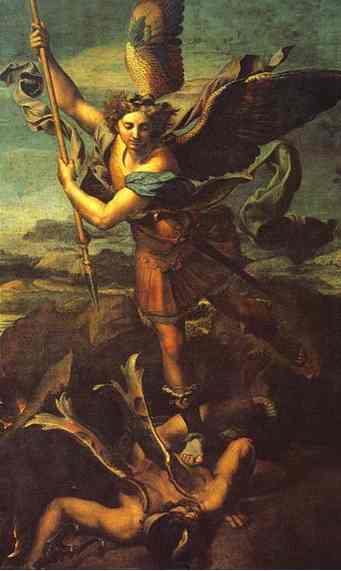
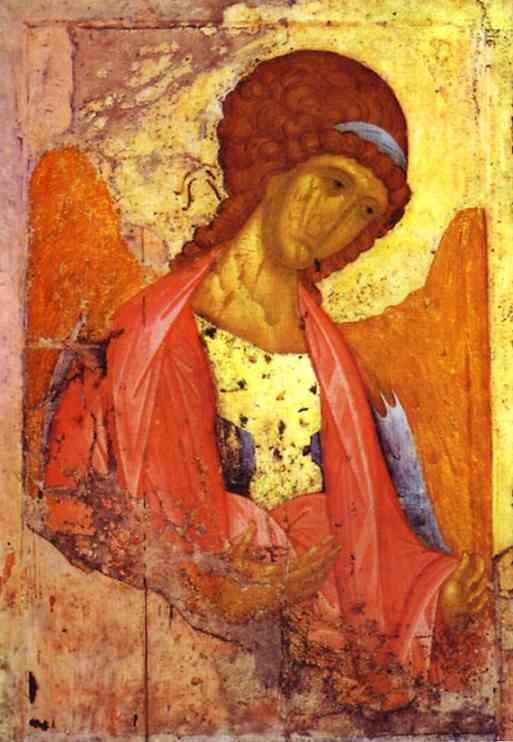
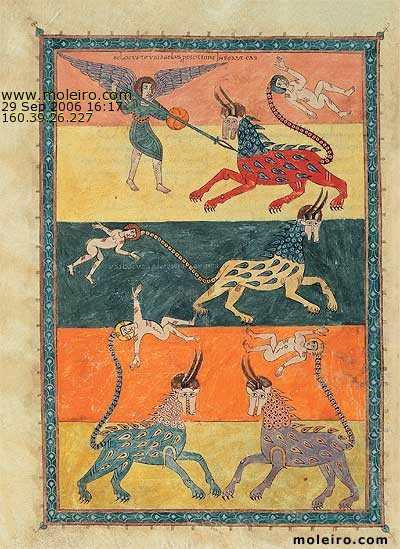
Feast of Saints Michael, Gabriel, and Raphael


The images are by, from top to bottom, Dominico Ghirlandaio, Raphael, Piero della Francesca, Andrei Rublev, and anonymous (the tenth-century Girona Beatus).


I have nothing much to add to the visuals today, except to say that the first reading for today is from (pick one) either the weird and cool Book of Daniel or the weird and cool Book of Revelations.

I also insist that everyone read Guillaume le Fou's important post on what's happening right now in Mexico, about which we hear very little north of the border.

Happy archangel day, everyone.


Tuesday, September 26, 2006

laxity and delusion


After struggling with so many great ideas and the clash of civilizations and relics and books and religion...


I declare today official silly blogging day.

I accept neither depth nor coherence.

Today is all about the glorious reality that is writing whatever one can pull ex culo and immediately publish on the internet.

What could be better?

I could write pages about mustard, tomes about dust, volumes about mistied shoes. I could seriously type randomly: ashjsdh shdghsdgi.

I can do these things, I have the technology.


I could write nasty poems about the Bush administration in Latin (cur morta est intelligentia?) and then turn that Latin into pig-Latin Latin (ur-cay orta-may est-ay intelligentia-ay?).

I could speak flippantly about my dissertation. For example I could imagine having the chance to meet one of the historical figures I am writing about in order to sort some things out. For example, I could meet Alfonso VII in a bowling alley. I would say things to him like: "Just spin the ball to the right, that way you might get the pin on the right to slide across and hit the one on the left. By the way, did you really order that charter giving the monastery of Sahagun the right to coin money in 1119? No, a smooth movement with the arm..." Of course, I could get testy: "You know, you don't have to tell us you were crowned emperor in every single charter! I've read about five hundred of them now. You come off like a blowhard. Knock it off."

I'm working too hard, I guess.


The tape, seal and church sign? Here.

Sunday, September 17, 2006

de ponteficis et imperatoribus

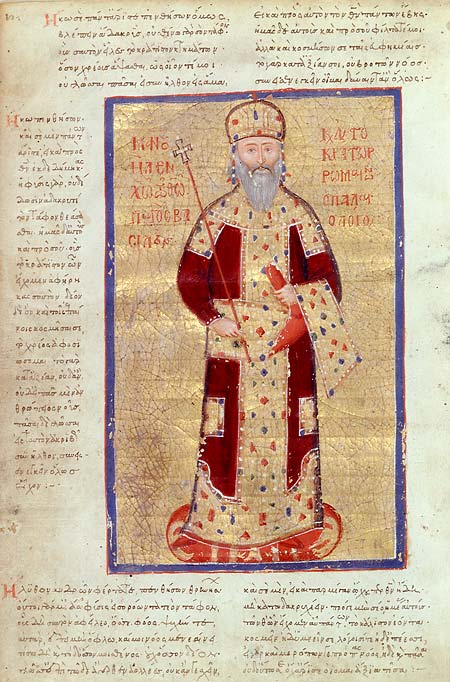
Manuel II Paleologos, one of the last eastern Roman emperors.

Everyone has been following the question of pope Benedict and his remarks about Islam quite closely. He has finally apologized, though perhaps not as enthusiastically as some might wish. I myself believe that the pope was not fair to Islam, though I believe in a more subtle way than the press may have suggested when it referred to his quotation of Manuel II out of context. I won't repeat arguments that I have already made on Jeff's and Prickliestpear's excellent blog posts on the subject, and for the most part I would like just to send people elsewhere to particularly good posts on this issue.

Crystal has taken the time to investigate that sad figure, Manuel II Paleologos, one of the last heirs to an empire that once stretched from Britain to Mesopotamia and in his time was reduced to a sliver of territory around Constantinople. Manuel was forced to play the charming and refined Greek supplicant in the courts of Western Europe, begging for aid to save his doomed city, aid that would never come and would be too late in any case.

Guillaume le Fou, in his comment on Jeff's blog, steered me to Juan Cole's post about the mistakes Benedict made in his discussion of Islam. It's good reading for those who continue to insist that Islam is by nature a violent religion. There are a couple of other points he makes in this and in another post that may be good to take into account. One is about how many in the West see Muslims as "thin-skinned":
Some commentators have complained about Muslim sensibilities in this regard. But in my view, this sensitivity is a feature of postcolonialism. Muslims were colonized by Western powers, often for centuries, and all that period they were told that their religion was inferior and barbaric. They are independent now, though often they have gained independence only a couple of generations (less if you consider neocolonialism). As independent, they are finally liberated to protest when Westerners put them down.

There is an analogy to African-Americans, who suffered hundreds of years of slavery and then a century of Jim Crow. They are understandably sensitive about white people putting them down, and every time one uses the "n" word, you can expect a strong reaction. In the remarks the pope quoted about Muhammad, he essentially did the equivalent of using the "n" word for Muslims. It is no mystery that people are protesting.
Like with the protests against the Danish cartoons, people seem all-too-ready to both condemn protests they see as showing too much sensitivity and also group every reaction in the Muslim world into one pot. The press helps, of course, by reporting about peaceful, if passionate, demonstrations along with acts of vandalism against churches, threats by terrorist groups, commentaries by organizations like the Muslim Brotherhood in Egypt, and statements by individuals, as if this entire reaction were orchestrated by one group with one goal in mind.

Of course, Muslim clerics should stress peace and understanding, and many do. Attacks on churches should always be condemned. The Turkish politician who compared Benedict to Hitler is either stupid or irresponsible (note that one politician said this, not Turkey as a country, though I have seen it stated otherwise on blogs). One insurgent group in Iraq, apparently lacking any sense of irony whatsoever, has threatened to attack the Vatican because Benedict may have suggested Islam was a violent religion. Still, why do people in the West refuse to see that many people in Muslim countries have felt used, bullied, and vilified by the West and that regardless of the fact that some Muslims may overreact to what they perceive as provocations, it is our responsibility to build bridges to the 900 million followers of Islam, not burn them. Those who feel we have the right to insult their faith because some of them may insult us are advocating schoolyard politics.

One mistake that Juan Cole made was to say that Benedict should refer to the Church's policy towards Islam as expressed in Nostra Aetate. The first Vatican response actually did quote the same sections that Cole referred to:
' The Catholic Church rejects nothing that is true and holy in these religions. She regards with sincere reverence those ways of conduct and of life, those precepts and teachings which, though differing in many aspects from the ones she holds and sets forth, nonetheless often reflect a ray of that Truth which enlightens all men. Indeed, she proclaims, and ever must proclaim Christ, "the way the truth, and the life" (John 14, 6), in whom men may find the fullness of religious life, in whom God has reconciled all things to Himself (4).

The Church therefore, exhorts her sons, that through dialogue and collaboration with the followers of other religions, carried out with prudence and love and in witness to the Christian faith and life, they recognize, preserve and promote the good things, spiritual and moral, as well as the socio-cultural values found among these men.

3. The Church regards with esteem also the Moslems. They adore the one God, living and subsisting in Himself, merciful and all-powerful, the Creator of heaven and earth (5), who has spoken to men; they take pains to submit wholeheartedly to even His inscrutable decrees, just as Abraham, with whom the faith of Islam takes great pleasure in linking itself, submitted to God. Though they do not acknowledge Jesus as God, they revere Him as a prophet. They also honor Mary, His virgin mother; at times they even call on her with devotion. In addition, they await the day of judgement when God will render their deserts to all those who have been raised up from the dead. Finally, they value the moral life and worship God especially through prayer, almsgiving and fasting.

Since in the course of centuries not a few quarrels and hostilities have arisen between Christians and Moslems, this Sacred Synod urges all to forget the past and to work sincerely for mutual understanding and to preserve as well as to promote together for the benefit of all mankind social justice and moral welfare, as well as peace and freedom. '

Perhaps they should make it more clear.

I would like to refer my readers to one more blog. Check out "Charitable Hatred" and "The Pope on Islam" on Catholic Sensibility (I am not the Liam that usually comments on that blog, by the way). The best part is a response from Neil, the poster, to a comment on "Charitable Hatred:"
Regarding Pes' comment, I have read the Qu'ran, which is a very difficult book to interpret. We need to approach it with caution, remembering that some academics - after crude readings of the Book of Joshua, the sacrifice of Isaac, and the story of Cain and Abel - have been quick to label Christianity or all monotheisms as being violent.

To suggest one approach to reading the Qu'ran, Khaled Abou El Fadl of UCLA would suggest that we must first recognize the context of the Qu'ran, which partially speaks of a time when Muslims in the city-state of Medina were enmeshed in unavoidable hostilities and outnumbered. As he writes, "You would probably expect to find the leader of the community pumping up the fervor so that every member of this community would join the battle and ensure the survival of the community." Consequently, the Qu'ran, written at a time before the UN or international law, at times sounds rather disturbing.

He also writes, "But in fact, I find the Muslim text—whether it is the Qur’an, the traditions of the Prophet, or the texts of the jurists—often rising beyond these physical contingencies, and dreaming of the more humane, the more supernal, the more sublime, the more beautiful—for instance, the parts of the Islamic texts that emphasize no treachery in warfare outside of warfare."

The problem, he suggests, is when Muslims collapse texts describing "highly contingent realities" with texts "that express the subliminal, supernal reach," in a dangerous manner that might remind us of the small number of Christian Reconstructionists.

The more universal texts, however, ground Islam in witness to the God whose justice does not require the political success of his followers in such a way that they should feel compelled to use violence to "win" at any cost. And, so, there is thus ample theological justification for the words of Nostra Aetate, which stand firmly against any crude and wholesale demonization of Islam. Furthermore, we might suggest that the temptation to violence in Islam is actually similar to the temptation to violence in Christianity - the poisonous belief that God is a player in our world, requiring us to "win" for him, dependent on his followers' earthly power.

None of this is meant to excuse the denunications of the Holy Father that seem to keep coming from the Middle East. Perhaps part of the Pope's lecture was inadvisable (this is at least debatable), but the denunciations of him are inexcusable: they proceed from ignorance and have been very painful to read and see.
An intelligent and sensitive response from someone who obviously is not a Benedict-hater. I advise everyone to be careful about certain negative opinions about the Qu'ran that are floating around out there.

I hope and pray that this crisis will be put behind us and that sincere people of faith everywhere will work more to mend than to offend.

Really, I would like things to calm down so I can concentrate on why the Mets keep losing now that they're one game away from winning the NL East. It will happen. And Pedro will rise again!

Thursday, September 14, 2006

Triumph of the Cross

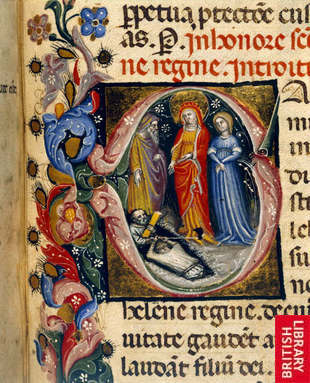
St. Helena finding the True Cross.

Today is the feast of the Triumph of the Cross. From the Franciscans at americancatholic.org:

Early in the fourth century St. Helena, mother of the Roman Emperor Constantine, went to Jerusalem in search of the holy places of Christ's life. She razed the Temple of Aphrodite, which tradition held was built over the Savior's tomb, and her son built the Basilica of the Holy Sepulcher over the tomb. During the excavation, workers found three crosses. Legend has it that the one on which Jesus died was identified when its touch healed a dying woman.

The cross immediately became an object of veneration. At a Good Friday celebration in Jerusalem toward the end of the fourth century, according to an eyewitness, the wood was taken out of its silver container and placed on a table together with the inscription Pilate ordered placed above Jesus' head: Then "all the people pass through one by one; all of them bow down, touching the cross and the inscription, first with their foreheads, then with their eyes; and, after kissing the cross, they move on."

To this day the Eastern Churches, Catholic and Orthodox alike, celebrate the Exaltation of the Holy Cross on the September anniversary of the basilica's dedication. The feast entered the Western calendar in the seventh century after Emperor Heraclius recovered the cross from the Persians, who had carried it off in 614, 15 years earlier. According to the story, the emperor intended to carry the cross back into Jerusalem himself, but was unable to move forward until he took off his imperial garb and became a barefoot pilgrim.
Many stories grew up around the cross and its origin that connected the physical origin of its wood with its spiritual meaning. It was thought by some to come from the tree of knowledge of good and evil in the Garden of Eden. According to some legends, the tree from which the cross was made grew from Adam's grave, or even from his mouth (remember that the hill of crucifixion, Golgatha, the place of the skull, was thought to be so called because it was where Adam's skull was buried -- uniting the old Adam with the new Adam, the Fall with redemption). Various stories connect the tree with different Old Testament figures such as Seth, Lot, and Solomon. You can find Caxton's translation of the Golden Legend story here, and a description of the cycle by Piero della Francesca in Arezzo here.

There is a beautiful and imposing medieval Greek Monastery of the Cross near Jerusalem, which I visited in 2000. It was across an olive tree-filled valley from the Israel Museum, and I remember walking through the valley, entering the monastery's tiny gate, and being mobbed by a tour group of ecstatically devout elderly Greek pilgrims who had no doubt about the veracity of the legend which located the exact spot where the tree had grown inside the monastery.

The Monastery of the Cross, Israel.

What happened to the cross that St Helena discovered and Heraclius rescued from the Persians? Like many relics, both bodies and objects, it has been broken into countless pieces and dispersed through the world. One sliver of it was given to our family by the Jesuit godfather of Filius imperatricis pulcherrima Africae occidentalis on the occasion of the latter's First Communion. We don't know about its provenance, and yes, perhaps it's not really a sliver of the True Cross. Then again, perhaps it is. It was a wonderful gift and often with relics and holy sites, the faith you put into them as symbols is as important as the facts involved on the ground. We know there was a Holy Cross, we know this is a sliver. The rest is faith.

Our relic of the Holy Cross. The tiny reliquary is about the size of a nickel, the sliver of the Holy Cross lay on top of the white embroidered cross in the case.

I'd like to leave you with a hymn composed by the great Latin poet Venantius Fortunatus (AD 530-609) which is often sung on this feast day. I will leave it in Latin, but if you must, you can find one of many English translations here.

Hymnus in Honore Sanctae Crucis

Vexilla regis prodeunt,
fulget crucis mysterium,
quo carne carnis conditor
suspensus est patibulo.

Confixa clavis viscera
tendens manus, vestigia
redemptionis gratia
hic inmolata est hostia.

Quo vulneratus insuper
mucrone diro lanceae,
ut nos lavaret crimine,
manavit unda et sanguine.

Inpleta sunt quae concinit
David fideli carmine,
dicendo nationibus:
regnavit a ligno deus.

Arbor decora et fulgida,
ornata regis purpura,
electa, digno stipite
tam sancta membra tangere!

Beata cuius brachiis
pretium pependit saeculi!
statera facta est corporis
praedam tulitque Tartari.

Fundis aroma cortice,
vincis sapore nectare,
iucunda fructu fertili
plaudis triumpho nobili.

Salve ara, salve victima
de passionis gloria,
qua vita mortem pertulit
et morte vitam reddidit.

Thursday, September 07, 2006

Islamofascaphobia


Late medieval Spanish Koran.

Yesterday I briefly watched CSPAN as I ate my lunch. There was a woman from a NGO (Third Way, I think) who was criticizing the Bush administration's approach to diplomacy, or to be more precise, its lack of the same. Someone called in and suggested she was wrong because our adversaries -- whether we're talking about North Korea or Iran -- are "evil" and "you can't talk to them." Before giving an intelligent reply about the importance of diplomacy, she had to profusely agree about how "evil" they were.

I understand that many people who have supported Bush have done so because they feel he demonstrates "moral clarity." To judge from the results of his policies and administration -- everything from Abu Garib to the response to Katrina to the problems of poverty in this country -- I find it hard to agree, but I can imagine that much of this feeling about "moral clarity" comes from his willingness to paint his foreign policy on one big canvass titled "The Battle of Good vs. Evil." This is a very dangerous starting point. One is reason is that it is so absolute it demands desperate measures -- such as wars to do away with evil. War, however, is evil in itself. If it is ever necessary, it must be a "lesser of two evils." There goes complete moral clarity. The propensity of this administration to rush to an armed response in any given situation without thinking of the possible outcomes shows great lack of responsibility. Glibly referring to the deaths of thousands and suffering of millions as "the birth pangs of a new Middle East" (Condi Rice dixit) shows an insensitivity that I find hard to reconcile with any definition of the word "good."

Still, they will not change the storyline. If we back out of Iraq now, we are Neville Camberlain. Why? Evil is evil. "Islamofascism" (an extremely offensive word) is the same as Nazism, which is the same as Communism. This is not a complex world, where different political forces with different interests use the tools given to them with a greater or lesser concern for justice and human life, it is black and white.

One of the greatest casualties of this kind of a worldview is tolerance, especially since the president and his supporters have to classify all those who oppose us in the Middle East under a term that links a religion (Islam) with a western ideology that this country has successfully fought against in the past (fascism). The resulting term "Islamofascism" is about as helpful to understanding problems of the Middle East and terrorism as the adjective "evil." It's a gross simplification that slanders a religion and gives the false impression that we are fighting one enemy with one agenda. Al-Queada = Hezbollah = Iran = Hamas = Syria. North Korea, Bush's greatest WMD containment failure, is conveniently left out of the equation, so that the subtextual message "the Muslim is the enemy" is that much more clear. It's always hard to say whether Bush and the neo-cons use these ideas to strike fear and prejudice into voters' hearts, or whether they actually believe them, but reports that Bush did not know the difference between Sunni and Shiite Muslims immediately before the invasion of Iraq are disturbing.

Juan Cole gives a good analysis of those who Bush sees as our enemies, pointing out the complexities and differences between the groups. We owe to ourselves to understand the Muslim world better: the price of simplification is simply too high. Yes, the attacks on September 11 were evil. That much we know. The rest is not so simple.

Tuesday, September 05, 2006

Peace, God, and Religion

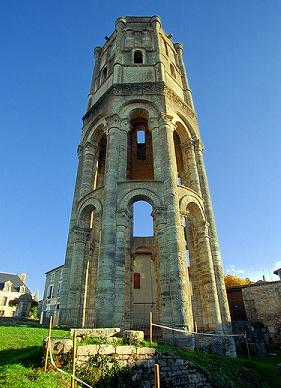
The ruins of the Abbey at Charroux, where the Peace of God was first declared in the tenth century.

Guillaume le Fou and I have been discussing religion and war over at his blog, Zone. A big subject, to be sure, and often depressing. I think there is more than one kind of religion, but it is true that religions that profess absolute certainty can be dangerous.

A couple of days ago I was listening to Speaking of Faith, the radio program I choose when I fold laundry. I discovered it initially because of their interview of the late, great Jaroslav Pelikan. Not every show treats topics of interest to me, but it is always well-done and has a great supporting website. The last show consisted of an interview with Eboo Patel, the founder and executive director of Interfaith Youth Core in Chicago, an organization that encourages interfaith understanding and social action among young people.

Patel is extremely articulate and effective, and he is anything but a dreamy idealist who spends his time singing Kumbaya. He knows the stakes involved when it comes to youth and faith:
So when people say to me, 'Oh, Eboo, you know, you run this sweet little organization called the Interfaith Youth Core and you do such nice things, you bring kids together,' I say, 'Yeah, you know, there's another youth organization out there. It's called al-Qaeda, and al-Qaeda's been built over the past 25 years and with lots of ideas of how you recruit young people and get them to think that this is the best way they can impact the world.'
Patel's personal story is interesting as well. He is Muslim, but his interest in religion and social activism came through working in a Catholic Worker House in Chicago:
And at some point, a Catholic worker leader put his hand on my shoulder and said, 'Kid, you've got to find a way to engage in social justice mind, body, and soul.' And so I began reading in other religious traditions, and interestingly enough, kind of avoided Islam until I met my grandmother again, and this is in the summer of 1998. I went to Bombay, India, the summer before I went to graduate school in England, and I discovered that my grandmother had this 40-year history of housing battered and abused women in her apartment in south Bombay. And she brought out all these Polaroids of these women from Hyderabad and Gujarat and Tamil Nadu. And then finally, at the end of all these stories, I wanted to hear my grandmother's story. I said, 'Why do you do this?' And she said, 'Because I'm a Muslim, and this is what Muslims do.' And it was like heaven cracked open and spilled onto me. And I realized that there was a Dorothy Day figure in my faith, in my family. I was standing in an Indian-Muslim Catholic worker house.
The work he does with people of different faiths both encourages them to understand what is distinctive in their own beliefs as well as what they have in common with others. This open religion is completely different from the fundamentalism that creates intolerant forms of Islam or Christianity (whether we're talking about Pat Robertson or the "extra ecclesiam nullus salvus" crowd in my own beloved Catholic Church). I recommend that people give this program a listen or at least check out the transcript. The "Program Particulars" section has some nice extras, like the following photo:


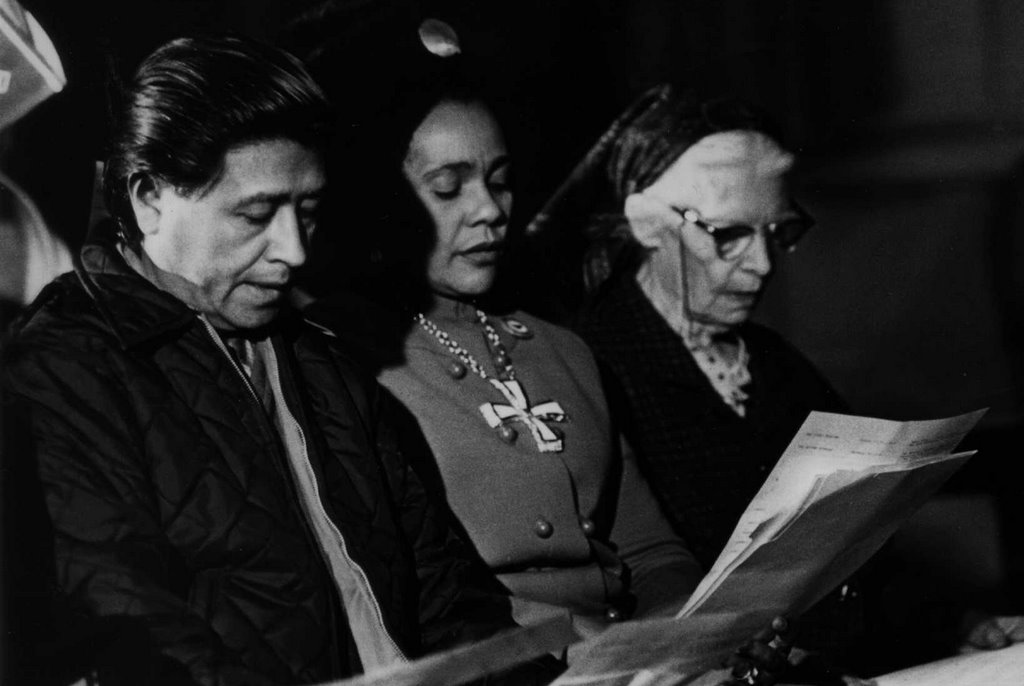
Cesar Chavez, Coretta Scott King, and Dorothy Day at St John the Divine, New York City. February 20, 1973.

Thursday, August 31, 2006

Back from Utah

Medieval Utah -- Anasazi wall painting, 12th or 13th century.

I'm back from a brief trip to Utah, where strange things are always occurring. It appears that the righteous and God-fearing Utah Liquor Commission, always ready to stand up to non-Mormon depravity, were ready to bust a convent of Carmelite nuns who were ready to turn their fundraising fair into a Sodom and Gomorrah of booze and gambling (i.e., they were going to have beer and bingo). The commission finally allowed the nuns to sell beer, but the good sisters had to agree not to charge for the bingo cards -- and damnit, put it in writing, because the Latter Day Saints on the commission were certainly not going to take their word for it. You have to keep your eye on those nuns, otherwise they'll lead all of Zion into debauched corruption.

It's news stories like this, plus the fact that Utah still has the highest public approval rating of the Bush administration, that can lead even our fearless leader himself to make a public appearance. And he did, to speak to the American Legion. One would think that at least speaking to the Legion in Utah our president could not raise much of a fuss. Stereotypes, however, always disappoint, and the capital city of ultra-conservative Utah has a firebrand ex-ACLU lawyer as mayor, who not only led a demonstration against the president's policies, but gave one of the most no-holds-barred anti-Bush speeches I have heard from the mouth of an elected official. You can see it here or read the transcript here. It makes one wonder about facile descriptions of red states and blue states. I wonder if the nuns were at the demonstration.

PS: Good news -- Guillaume le Fou, a.k.a. Cowboyangel, has started to blog again. Stop by his site and encourage him.

Wednesday, August 23, 2006

book meme

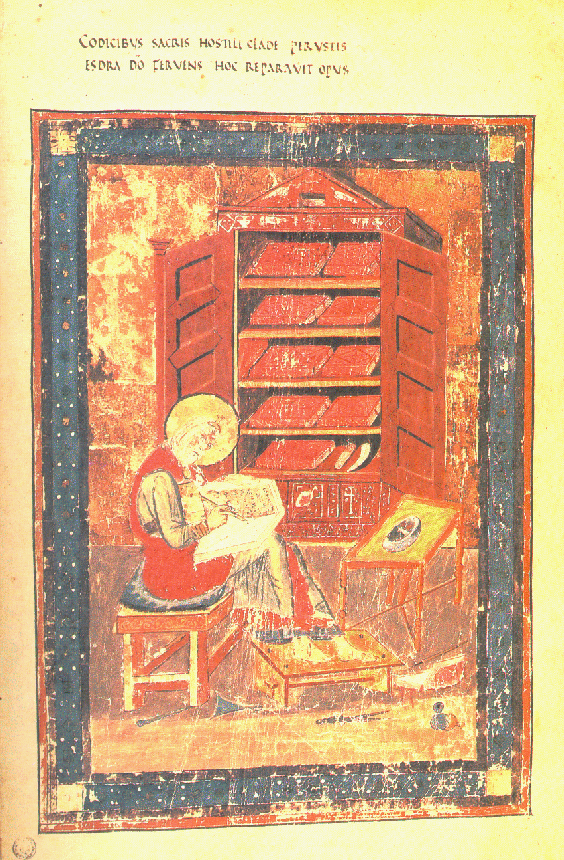
Ezra and his books.

Sandalstraps tagged me with this book meme, which I will only half take seriously. It did get me scratching my head -- damn, I'm a book person, I've spent my whole life reading and writing and the name of a book that has changed my life does not jump immediately into my head? I think books have changed my life, but just one? Certain books have changed how I think about certain things (Hobbes' Leviathan changed how I look at politics, for example), but does that change my life? When I was sixteen, I thought Nietzsche changed my life, but now I realize I didn't understand him. Besides, as I grow older I see that real change is slow and over time. Even sudden conversions as a result of a crisis aren't as unexpected as one would think -- life has been laying the tracks for them, unseen (or in the case of the good conversions, God has been calling for sometime, unheard).

I will, however, do my best.


1. One book that changed your life: This was a tough category, and I had no idea until I saw that Brian, who had also caught the meme, listed Purgatorio under a different category. I think the Divine Comedy has changed my life, though I'm not sure how. It just seems to be the summit of human achievement -- theology, spirituality, history, politics and everything else all wrapped up in the most beautiful poetry imaginable. I feel constantly drawn to it and I think Dante's encompassing vision may have had quite a bit to do with my own return to religion -- if that's true, it has changed my life, and quite a bit.

2. One book that you've read more than once: Lunch Poems by Frank O'Hara. This gem of a book changed my life as a poet: I saw that a poet did not have to limit himself or herself to "sensitive thoughts about feelings," but that personality and energy could make the simplest of poems electric. I have not only read this book more than once, I've bought it more than once after having lent it and never seeing it returned. One of its poems, called "Poem":

Lana Turner has collapsed!
I was trotting along and suddenly
it started raining and snowing
and you said it was hailing
but hailing hits you on the head
hard so it was really snowing and
raining and I was in such a hurry
to meet you but the traffic
was acting exactly like the sky
and suddenly I see a headline
LANA TURNER HAS COLLAPSED!
there is no snow in Hollywood
there is no rain in California
I have been to lots of parties
and acted perfectly disgraceful
but I never actually collapsed
oh Lana Turner we love you get up


3. One book that you'd want on a desert island: Okay, I know everybody says this, but I would take the Bible. Not only would a desert island experience be a great chance for really studying scripture, but besides, the Bible has everything: poetry, adventure, revelation. Never a dull moment.

4. One book that made you laugh: Candide by Voltaire. If you haven't read it, trust me: brutal, but hilarious.

5. One book that made you cry: I had to think about this one. One book that moved me a great deal was Raymond Carver's collection of short stories, Where I'm Calling From, especially the haunting "A Good Small Thing." The part about the nuns in the South Bronx in Dom Dillo's Underworld is also beautiful.

6. One book you wish had been written: The Complete and Perfect Prosopography of Eleventh- and Twelfth-Century Leon and Castile. Yeah, it doesn't sound too exciting. Still, if you were doing the work I'm doing, you'd understand.

7. One book you wish had never been written: There are books out there that represent the most hateful and dangerous ideas that have been formulated (e.g, Mein Kampf), books that represent the worst part of that sewer called contemporary American politics (Unfit for Command or anything by Ann Coulter) and books that can be classified as hate crimes against good English prose (Dan Brown). Still, to wish a book had not been written is something like destroying or burning a book. One shouldn't fight bad ideas with repression, but with good ideas. If I had to choose one, it would be the Protocols of the Elders of Zion, for its dangers and its staying power.

8. One book you're currently reading: The Quest for El Cid, by Richard Fletcher. This is a wonderful book about eleventh-century Spain for non-specialists, and I would recommend to any history buff. It's well written, and Fletcher has a great gift for explaining the technical difficulties of medieval historiography in a way that is neither dry nor confusing.

9. One book you've been meaning to read: Any big scary theology tome by Karl Rahner or Paul Tillich.

10. Now tag five people: This is the hard part, since most of my blog friends have already done this. Here goes. If any of you have already bookmemed, put the link in the comments: Jeff, Crystal, Gillaume le Fou, mi primo, and Fay.

Now I'm going away for a few days. Behave yourselves.

Tuesday, August 22, 2006

Happy feast of Antoninus

St. Antoninus

I was just reading that, according to the 13th-century chronicler Rodrigo Jimenez de Rada, the bishopric of Palencia, lost during the Muslim conquest, was refounded by King Sancho el Mayor of Navarre in the 11th century after a miraculous experience. He was hunting in the woods that covered the once prosperous Roman and Visigothic city and chased a boar into what appeared to be a cave. When he raised his arm to strike it with his lance, his arm became paralyzed. He had committed sacrilege, brandishing a weapon near the altar of the tomb of St. Antoninus. He only recovered when he promised to build a church on the site. That church would become the Cathedral of Palencia.


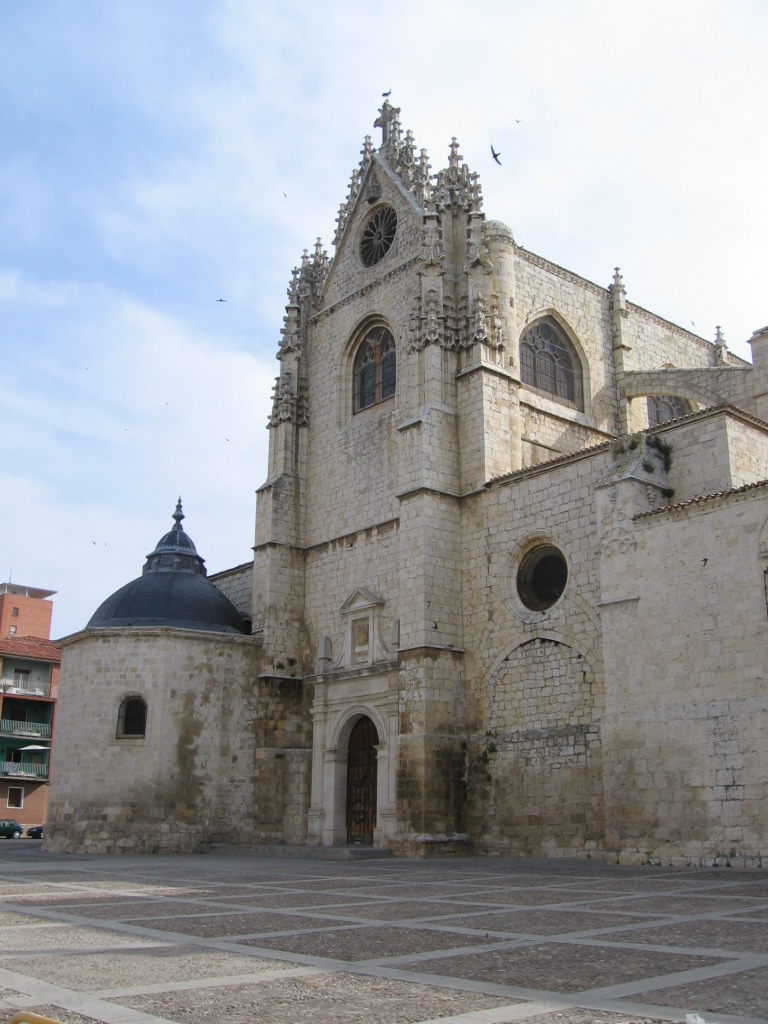
Cathedral of Palencia -- late gothic, not the one Sancho built.

None of the 11th-century documents refer to this legend, and although there was a Visigothic crypt on the site, it probably did not contain the relics of St. Antoninus, since the cult of that 4th-century Syrian martyr was not brought to Spain until the 11th-century. Now however the story of the boar is represented in Renaissance carvings next to the stairway that leads down to the crypt. Today is the feast day of another St. Antoninus. Happy feast of St. Antoninus.

Tuesday, August 15, 2006

The Assumption, the dwarves, diversity

Romanesque sculpture of the Assumption of the Blessed Virgin Mary. Happy Feast of the Assumption everyone! Get to church!

Very busy as usual. Later this week I will respond to Sandalstrap's challenge, right now I'd like to point out a couple of interesting news items.

According to a recent Zogby poll, while 75% of Americans can identify at least two of the seven dwarves, only 25% can identify two supreme court justices (even though "Grumpy" and "Scalia" can be used interchangeably for both categories). What fun. Uninformed public = no democracy. Also, 74% can name the Three Stooges while only 42% can name the three branches of US government. Other questions reveal other examples of cultural and scientific illiteracy. This is definitely something that would be a lot more funny if it weren't tragic.

Better news comes from the census bureau, via the New York Times. 60% of New Yorkers are either immigrants or children of immigrants. While this news gets the minutemen to start loading their shotguns, it pleases me greatly. This city continues to be dynamic and ever-renewing itself, diverse, and full of people with imagination, desire to work, and an international perspective. I'm a student and I can't usually afford the shows, the clubs, and the expensive restaurants that amuse wealthy New Yorkers, but I can enjoy walking down the street and seeing the world in all its multiple human beauty, the music of hundreds of languages in my ears. The Chinese chef in the Mets cap speaking Spanish to the Mexican delivery guy wearing a Knicks jersey who will be taking the food to some Ukrainians watching a Jets game. I love this town.

Wednesday, August 09, 2006

liberals and conservatives

Ottoman manuscript of the Pseudo-Aristotelian Secretum Secretorum. I had initially wanted to find an image of a manuscript of the Politics, but this is too pretty not to post.

Let me start this fragmentary blog post by saying that I am very happy Ned Lamont won in Connecticut and find Lieberman's reaction appalling.

I must be a liberal.

Last night, desperate to get news on the primary while cooking dinner, I tuned my radio to Air America for the second time since they went on the air. For the second time, I quickly turned it off. Instead of information, analysis, news, etc., I had to listen to some fool ranting for fifteen minutes about how Dennis Miller was joining Fox News again. Was this an intelligent discussion about why Miller's support for Bush and his policies are misguided or mistaken, a cultural analysis of what it means to be a "hip conservative," or anything, however humble, that could contribute to meaningful political discourse? No, it was a tirade about how Miller was a "failed comic," an "idiot" of "mediocre talent" whom the Air America commentator would relentlessly "mock."

Really, is this the best we can do? Copy Ann Coulter's style? I have not listened to much Air America and perhaps there are better programs than this, but I have no desire at this point to listen to find out.

I have no problem with using the most sophomoric of obscenities and insults towards our current administration when drinking with friends, but I think public discourse should offer a bit more. I have tried to avoid letting emotion get the better of me on the blog, just because there are too many blogs out there that are dedicated to showing how stupid/dangerous/evil the Republicans/Democrats/wingnuts/moonbats are, and there's no reason to add to it. Sometimes I've come close, but even then I've mentioned certain politicians by name. I have no desire to hate all Republicans and Republican voters. If you're reading this and you still enthusiastically support Bush, I don't hate you. I am thoroughly perplexed by you, but I don't hate you.

I believe the Bush administration, aided and abetted by a fawning Republican congress, has done irreparable damage to this country and to the world in general through debt, corruption, war, and environmental destruction (and that's the short list). The only short-term solution is a strong opposition, and this is why I support Ned Lamont. I don't see myself as "partisan," though, because I can't place a great deal of faith in the Democratic party. There are some Democrats I admire, and I sincerely think they would do much better than the Republicans at running the country, but I think the system itself is not working well. American democracy is dominated by sound-bites and cash, and it will need more than an election to fix it.

Am I a liberal? At dot.commonweal I found the following quotation from a conservative originally from First Things:
You know you are a liberal if you think that the poor need money more than they need moral discipline.
All this tells me is that I'm not a conservative, because the sentence makes very little sense to me. There's so much wrong, where should I start? The paternalistic tone so common to conservatives who believe that they themselves have moral discipline and probably don't know what it's like not to have money? The utterly simplistic notion that social programs (money) and "moral discipline" are mutually exclusive? The complete lack of understanding of the manifold social problems that are very real that many of the underclass face (cycles of violence and poverty, racism, a lack of education, etc.) that make preaching about "moral discipline" irrelevant if not insulting? I could go on.

Somebody left this comment on that post:
You know you're a liberal if you:

Hate Walmart
Wear Birkenstocks
Eat only organic foods
Think Al Gore is a great prophet
Think Hillary Clinton is too consrevative
Are rejoicing at Lieberman's defeat
Hate George Bush
Believe hate is a very destructive emotion
Hate Dick Cheney
Believe hate is a very destructive emotion
Hate Donald Rumsfeld
Believe hate is a very destructive emotion
Use the phrase "Speak truth to power"
Think all big corporations are evil
Believe that the monogamous hetereosexual family is the nest of fascism
Believe that terrorists' grievances are all legitimate
Believe that an angry conservative is full of hate
Believe that an angry liberal is passionate

I could go on (and on, and on...)

NOTE: One must believe at least 90% of the above list ;))

Hmm... Am I a liberal. Let's see:

"Hate Walmart... Hate George Bush... Hate Dick Cheney... Hate Donald Rumsfeld... Believe hate is a very destructive emotion."

This is, of course, a trap to show what hypocrites we are. I believe Walmart is a very negative and malicious influence on society. I have written about the Bush administration before. As a Christian, I do believe hate is a destructive emotion, though as a human (and a sinner), not one I can always avoid. But my political opposition to these men and that corporation is not based on hatred, just on the fact that they have perpetuated such a great amount of injustice on our society and on the world at large that they must be stopped. Many on the right talk about liberals' "obsessive hatred of Bush" (this after what they did to Clinton). If I had time I could list the hundreds of reasons why I oppose Bush. Calmly, without hatred.

"Wear Birkenstocks... Eat only organic foods." I have sandals I wear in summer. They are not birkenstocks. My personal style is very little hippy-influenced. I can't afford organic foods and I don't worry too much about that right now.

"Think Al Gore is a great prophet... Think Hillary Clinton is too consrevative [sic]." I think Al Gore (along with just about every responsible scientist) is right about global warming and that we ignore what he's saying at great peril. I don't know if Hillary is conservative or not -- she's a consummate politician and her ideology changes with the wind. She is not particularly progressive.

"Use the phrase 'Speak truth to power'." I don't think I have used that phrase, but many people left and right feel they are poor, oppressed and misunderstood because they dare to "speak the truth" (think David Horowitz). I do like Stephen Colbert, though.

"Think all big corporations are evil."

I think big corporations are profit-oriented, and profits are morally neutral. Many of them will do nasty things if they can get away with it, because they're not about good or bad, but about money. That's why the state needs to regulate them.

"Believe that the monogamous hetereosexual family is the nest of fascism." Right. That would include my family. I'm still waiting for someone to explain to me, however, how gay marriages threaten straight marriages.

"Believe that terrorists' grievances are all legitimate." Once again, a trap. If you look for root causes, anything more sophisticated than "they hate our freedom," the terrorists win, you are blaming the victim, etc. We ignore the real reasons behind terrorism at our peril.

"Believe that an angry conservative is full of hate... Believe that an angry liberal is passionate." See above on hate and also above on Air America. If you're full of hate, you're full of hate.

I have to take filius imperatricis pulcherrimae Africae occidentalis out for lunch, so there's no time to analyze this further right now. Am I a liberal?
Monday, August 07, 2006

Another reason to love Spain

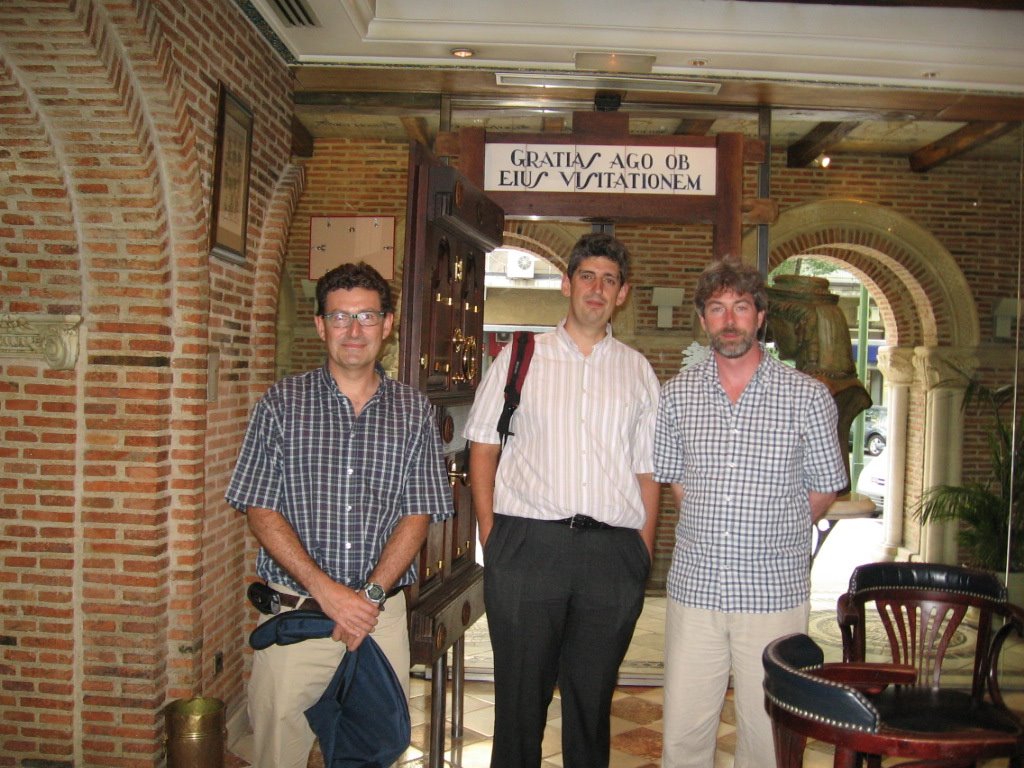
Myself (R) with my good friends Miguel (L) and Ernesto (C).

I have been far too busy with the middle ages to blog, but I thought I'd post this picture from Madrid to point out another great thing about Spain. Look closely at the words over the door. Is there anywhere in the US where the "Thank you for your visit" sign is in Latin?
Monday, July 31, 2006

Lebanon

Medieval fresco from Lebanon

I've waited a bit to touch this topic. I find it almost to frustrating and depressing to address. Steve sponsered an interesting conversation about it on his blog, and I would just like to add to the comment I left there, especially centering on the question why I consider the Israeli response disporportionate:

1) The Israeli attacks have killed over 500 people and displaced three-quarters of a million people from their homes. In a population of under four million, this is about one-fifth of the inhabitants of the country. This is catastrophic.

2) Many of the targets seem to be attacked (in the most generous interpretation of what's going on) with anything but surgical precision. In the past few days we have seen the appalling massacre of civilians, many of them children, at Qana, a bombing of a UN Post, and an attack on a Lebanese military jeep by an unmanned drone that killed a soldier and wounded three others. In the latter case, and Israeli Army spokeswoman says they thought a Hezbollah militant was inside the jeep, but that afterwards, an "investigation later revealed that an officer and soldiers from the Lebanese army were hit, and they were not the target of the attack. Therefore the army expresses regret about the event."

In the case of the Qana attack, the Israeli government claimed that it had warned the residents of the village to leave before the attack. Leaving is a difficult proposition for many Lebanese, given the current refugee crisis, the difficulty of traveling for the poor, and the fact that Israel has attacked people trying to leave conflictive areas. It is hard to conclude that Israel makes eny effort whatsoever to spare civilian lives in this military operation.

3) Israel's attacks have not been limited to strikes on Hezbollah, but have included attacks on Lebanese infrastructure. One bombing of a power plant near Beruit has resulted in a catastrophic oil slick. It is very difficult to argue that what we are witnessing is only a military operation against a terrorist organization and not a war against an entire country.


Meanwhile, the government of my own country has fought any attempts to call for a cease-fire and continues to speed up bomb deliveries to Israel. This is not surprising, since the Bush administration's first instict in any conflict seems to be to react militarily. I am afraid, however, that Israel is not helping its own security in the long run. They are only creating an unstable Lebanon where poverty and hopelessness and memories of massacres incubate in slums where the only alternative offered will be that of extremism. The operation may reduce Hezbollah's operational abilities in the short term, but at a great cost.

Like I said, very depressing and frustrating. I lament the deaths of the Israelis who have been struck by Hezbollah's missles just as I lament the death and destruction suffered by the Lebanese. Still, I can imagine nothing coming out of this new war except more brutal suffering for everybody involved.

Wednesday, July 26, 2006

meditations on turning forty


The seven ages of man, made famous in the English-speaking world through Jacques' speech in
As you Like It. I'm the old guy on the right, dressed in pilgrim garb.

I turn forty today and I must admit I'm not going gently into that good birthday. I know I should be a sport, but... At least I'm not spending the day the way I planned, rolled up into a ball in the closet and sobbing. Imperatrix pulcherrima Africae occidentalis has organized a party for me tonight in a bar in the East Village. They even said I could bring an ipod full of my music (wait until everyone hears the rap in Latin). So I should have a good time.

What is it about turning forty that bothers me? The physical decrepitude, the loss of youth, the lack of achievement in my life? No, I'm fine with that. My constitution is that of one who is clumsy but sturdy and I go forward slowly in good health none the worse for wear, like a patient burro. I never really liked youth, so I'm fine with losing it. It is true that I am middle-aged and have the income and savings of a college student, but hey, I've lived a couple different lives and now I have a family I love and am doing something I find worthwhile.

It's just that I got to forty so quickly. Just yesterday I was five years old listening to my grandfather telling me about how his grandmother arrived from Ireland as a child, her suitcase in one hand and her little sister in the other. Then a blur passed by. I woke up and I'm forty and my grandfather has been gone for thirty years, dead like so many people I have loved, and the train shows no sign of slowing down. What happened? I was in Madrid last week and I said to myself, "I spent ten years here? It's been six years since I lived here? Where did all the time go?"

Life is short, life is precious. Really, I have nothing to complain about. Perhaps this wee bit of melancholy and panic is good medicine that will teach me to appreciate all that God has given me, the beauty of every passing second, the miracle of love.

Time to take stock of things, order some Chinese dumplings for lunch, and go out and face the world in my fortieth year.

Friday, July 21, 2006

the return

Leon Cathedral, night.

I have returned. It was great being back in Spain after five years. When I arrived, it was as if I hadn't left, but somehow overnight they had changed the currency and set up Turkish restaurants all over Madrid. Good work was done in the archives and good eating in the bars and restaurants. Once I had the chance to walk through Madrid, I saw some real changes, for better and for worse. There was more of an effort to restrict traffic in the center, which was good. There was a greater variety of people, making a city which always cosmopolitan even more so. At the same time, life was faster and more stressful. My friends who still live in Madrid want to go someplace smaller. There are Starbucks everywhere, which a city with so many great cafes does not need. Things were more expensive, but still relatively cheap for someone who lives in Manhattan.

Right now I have jet lag compounded by New York mugginess, so I'll leave the details until later. I also am suffering the effects of the last week of my stay, which involved staying up late with friends at night and getting up early to go to the archives. There is never much sleeping done in Spain in the summer. Still, a great trip. Now I think it's time for a siesta -- a New York siesta.

Monday, July 03, 2006

hasta luego

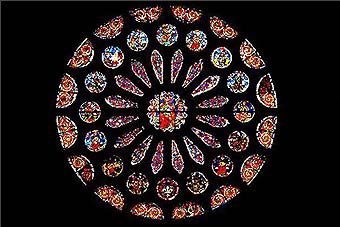
Rose window, Leon Cathedral.

I am off to Spain for my research trip. If I don't have time to blog while I'm there, see you all in a couple of weeks.

Thursday, June 29, 2006

madness sets in

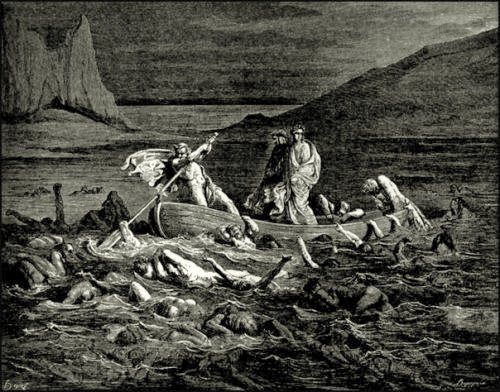
Dante and Virgil crossing the river Styx (NOT the band Styx).

For the past couple of days I have not been able to keep two songs out of my head. "Don't Stop Believin'" and "Separate Ways" by Journey.

Journey.

Why?

It's horrible... despite all the good music that has been created since the beginning of history, suddenly I'm at a strip mall in the 1980's again. Why?

Perhaps... just perhaps... It's not due to chance. Perhaps the CIA is sending rays into my head from the top of the Empire State Building. They know I'm dangerous, they know if I finish my dissertation on the use of religious language in the construction of royal identity in eleventh- and early twelfth-century Leon and Castile that my work will be the beginning of the end for their grip on power. They fear me, so they have decided to drive me mad.

Yes, mad.

The rays are potent. I'm working on some charters, or making a sandwich, or feeding the cat, and suddenly Steve Perry's voice is in my head, telling me not to stop believing. Then the lame synth riff from "Separate Ways," then "Don't stop believin'" again. I tell you, I can't take it.
It's time to take a break, have an iced coffee, and listen to some Bob Dylan.

With tin foil wrapped around my head.

Wednesday, June 28, 2006

intolerance and the lazy blogger


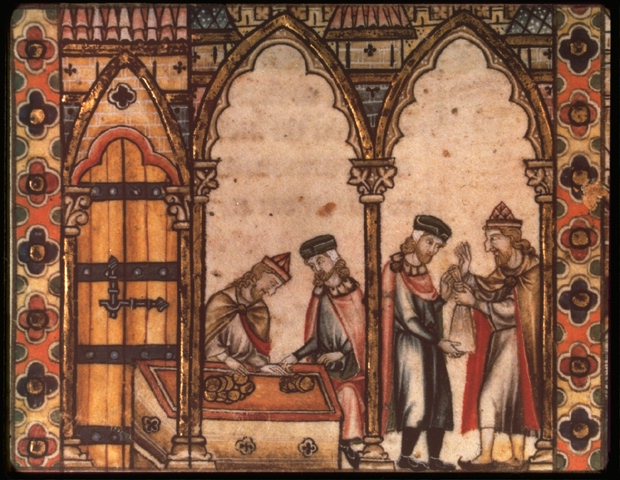
Medieval bigotry. Image of Jewish moneylenders from a French manuscript. Note the characteristic hats, hooked noses, and the closed door that represents the clandestine nature of the transaction.

What I have below is actually the skeleton of a blog entry I started five days ago and never finished. I ran out of steam, saved it as a draft, and, as often happens, completely lost the blog muse. "Strike when it's hot" seems to be the better course as far as blogging goes.

I haven't really returned to the blog because I've been lazy, uninspired, and depressed by the dark muggy northeast weather. I haven't really been lazy -- I've been working like crazy to get ready for my research trip -- but I've been blog-lazy. The only recreation I've really had has been cooking and watching soccer (Alas! Spain has once again disappointed us, losing to France 3-1). I still think I will present the following examples of how insane this world is getting, but stripped down to the minimum of commentary. They do, after all, speak for themselves.

Exhibit One: I was watching Ghana beat the Czech Republic in World Cup soccer and I was surprised when one of the players, John Paintsil, celebrated the win by exhibiting a small Israeli flag. Apparently Paintsil plays professional soccer for Tel Aviv, and he took out the flag in order to greet the fans who had traveled from Israel to see the game. This would have remained nothing but a curiosity were it not for the reaction to the small piece of cloth in Paintsil's hands. Ghanaian embassies in Arab countries received death threats. The government of Libya summoned the Ghanaian ambassador for consultation, and the Ghanaian foreign minister had to meet with Arab ambassadors to calm the "situation."


Exhibit Two: The Presbyterian Church (USA) recently voted to revise a policy that called for divestment from companies that sold military technology used by Israel in the occupied territories. One example is Caterpillar, which sells the bulldozers Israel uses to destroy Palestinian homes. As divestment goes, this case was mild. It never came to be a full policy, and was restricted to specific companies. It was not an attack on the Israeli economy on the whole, just on specific policies that have been widely seen as violations of human rights.

One may or may not agree on the policy. However, the rhetoric used to discuss divestment by its critics was extreme. Former CIA director R. James Woolsey, a Presbyterian layman, spoke at the conference and claimed the divestment policy put the church "clearly on the side of theocratic, totalitarian, anti-Semitic, genocidal beliefs." This was said, even though some American and Jewish groups support divestment. Calling someone genocidal is a great way to spur intelligent debate on an important issue.


Exhibit Three: A Greek professor was denied admittance to the United States when trying to get to a SUNY academic conference. He was detained at JFK, questioned about his political beliefs, and then sent back to Greece, told that there were "technical difficulties" with his visa.


Like I said, I believe all this speaks for itself.

Tuesday, June 20, 2006

the mainstream media


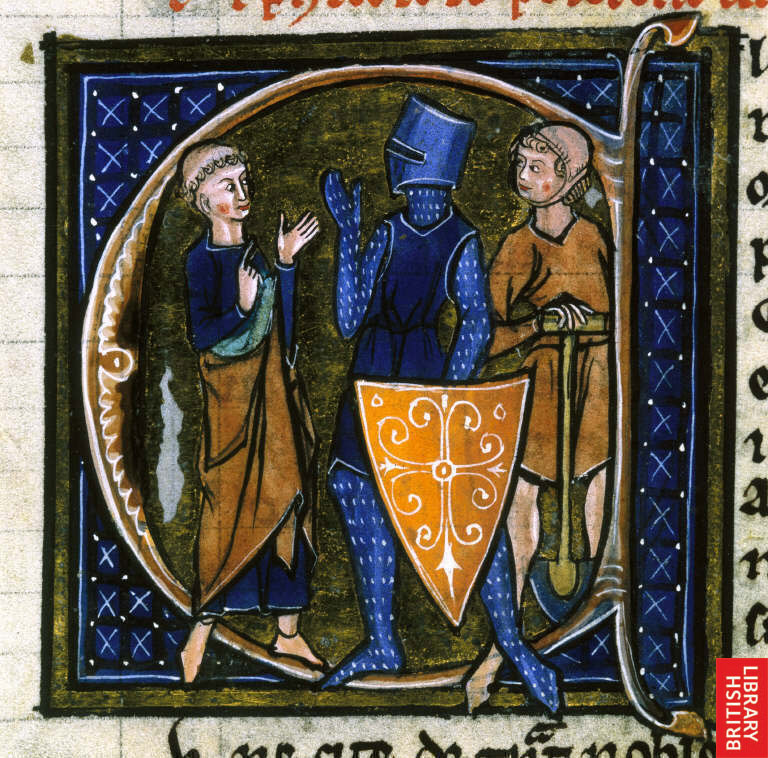
An illumination representing the "three orders" of medieval society -- the clergy, the knights, and the peasants. It has nothing to do with this post. Sorry.

I have been thinking about a post on Paula's blog from about a week ago on the plight of Christians in Kosovo. Paula rightly lamented that the media was not covering the situation, and she placed the blame on mainstream media biases.

The question of media bias is an important one and it is a hot issue here in blogdom. I just did a search on blogger for "mainstream media" and was informed there were more than 180,000 hits. What is curious is that people on the left see msm as hopelessly biased towards a right-wing agenda, and those on the right see the all-powerful "liberal media." There are media-watching sites from both the left and the right of our acrimoniously divided country. So who is right?

My personal opinion is that when there is an ideological bias, it tends to be towards a center-right side. Of course from my own left-wing perspective, the country has gone so far to the right in the past twenty-five years, "center-right" is actually quite conservative, especially on economic issues (taxes, welfare, public spending, government regulation). There are many reasons for this. One has been described by Noam Chomsky and makes a fair amount of sense: media outlets are large corporations that profit from the economic status quo as much as any oil or pharmaceutical company. Writers answer to editors who answer to publishers who answer to stockholders and advertisers. It's a money thing. Another is that journalists themselves do not, despite what many conservatives think, tend to be that liberal. Journalism is still dominated by educated white guys. One study showed that the majority of journalists are like the majority of educated white guys: a bit liberal on social issues, but moderate or conservative on others, especially economic ones.

I think there is another, perhaps more important reason, that the media tends to frustrate those of us who know something about a given issue and see how badly it is reported, and that is that journalism is on the whole simplistic. I suggested in my comment to Paula's post that I believe the reason the plight of Kosovar Christians is not reported is just because it doesn't fit into a simple narrative that assigns white hats and black hats to broadly defined groups. Complexity does not work in a twenty-second news spot. If my impression is correct and the media bias tends towards the right, I think it is because the Republican party and its apologists have been able to create a very simple black and white narrative that works well with how news is presented. You are with us or against us. America brings democracy to other countries. Government is bad. Taxes are bad. The private sector is always superior to the public sector. And so on.

I still would not put all the blame on the media. Media companies answer the market. No one is forced to turn on Fox, they do so because they want a simple story that makes them feel good about themselves. The problem is that we are a culture that has become infantile in many ways -- no attention span, eager for instant gratification. We are a nation of two-year-olds. Isn't it absurd that political parties spend hundreds of millions of dollars to air twenty-second spots of their candidates standing in front of a flag, and that something that banal can decide an election? Until we as a culture decide to stop being willfully stupid, there's no reason for the media to reward us with real news.

Thursday, June 15, 2006

soccer and urraca

The web site I found this on claims that it is a medieval Chinese drawing showing the origins of soccer. Works for me.

I have not blogged for awhile, since I have actually been working, or trying to work. Discovering that I can watch all World Cup matches on Univision has hindered me a bit, but I have been strong and only let myself become momentarily distracted.

I love the Univision announcers. One of them referred to English team captain David Beckham as "El capitan Spiceman" (let me know if you don't get the reference). I'm very excited to see Spain play as well as they should. I was never crazy about soccer, but the World Cup is something special. Watch a couple matches and it's hard not to be drawn into the excitement of the whole thing. It's amazing that a game that has scores like 0-0, 0-2, 1-2 can be exciting, but soccer is about things almost happening. Much like life, in a way.

Anyway, I must get back to work. I have finished going through the charters of Alfonso VI and now must start on those of Queen Urraca (reigned 1109-1126). Urraca had a difficult and not always successful reign, but she is interesting as she ruled as queen in her own right -- not at consort or regent, but as sole ruler. One can also sing about her to the tune of the 80's hit "Hey Mickey":

Urraca you're so fine,
you're so fine you blow my mind,
Urraca! Urraca!

And with that, I will return to my charters.

Friday, June 09, 2006

history and truth

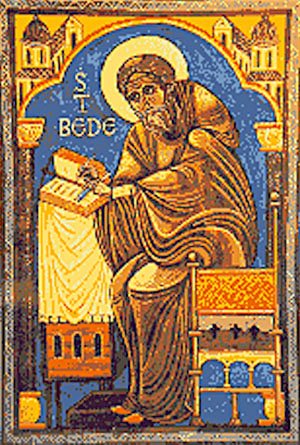
St Bede the Venerable, one of the great historians of the early Middle Ages.

Via Ted at The Late Adopter, an article on "revisionist history" by Joseph Zimmerman. Zimmerman commented on something scary I hadn't heard about. Apparently Florida governor Jeb Bush
approved a law barring revisionist history in Florida public schools. "The history of the United States shall be taught as genuine history and shall not follow the revisionist or postmodernist viewpoints of relative truth," declares Florida's Education Omnibus Bill, signed by Gov. Jeb Bush. "American history shall be viewed as factual, not as constructed."
It's hard to know where even to start with this, but Zimmerman does a good job of explaining the background of this bizarre piece of legislation. Once again, the conservative bugaboo raises its head: everything was fine until the 1960's, then:
American historians supposedly started embracing newfangled theories of moral relativism and French postmodernism, abandoning their traditional quest for facts, truth and certainty.
As Zimmerman points out, this story is itself revisionist history. Historians had realized that there is no history without interpretation long before. This is not "relativism" as conservatives try to portray it (no serious historian believes that one interpretation is as valid as another), but that catchword allows the conservatives to paint a simple dichotomy: liberals have no moral center, manipulate history, and teach our children lies about our noble founding fathers; whereas conservatives know there is one truth and one set of facts that need no interpretation. There are facts, a bible, and a constitution, and none of these things need interpretation -- they are clear and have always been understood they way we (conservatives) understand them now.
(As a side note, let me make it clear that I am referring not to the conservative intellectual tradition, but to the demagogues on the political right.)

One thing that seems to define the conservative mythos is the yearning for a golden age and an easily identifiable moment of corruption. For the people behind the Florida law, and for most of their fellow demogagues, that corruption clearly happened in the 60s (many Catholic traditionalists see it in Vatican II). Before then, it was all God and picket fences. If someone brings up the 50s that witnessed segregation, McCarthyism, terrible anxiety about nuclear weapons, and the Cold War, we are "revisionists."

Historical interpretation allows us to understand the complexities behind historical forces. Anyone who reads history this way will find it hard to swallow simplistic politics based delusions of "good guys" and "bad guys" dressed up as moral clarity. Where do policies like that lead us? Where have they led us in the past six years?

Thursday, June 08, 2006

Judas and the penalty clause

Judas.

Jeff has written a good post on Nostra Aetate and anti-semitism which I strongly recommend. In it he quotes a speech by Cardinal O'Malley of Boston who, when speaking of Judas, says
The scriptures describe the suicide of Judas, who sold Jesus for 30 pieces of silver. It says that he hanged himself, and his body burst open.
Actually, there are two versions. Matthew 27 tells the story this way:
Then Judas, his betrayer, seeing that Jesus had been condemned, deeply regretted what he had done. He returned the thirty pieces of silver to the chief priests and elders, saying, "I have sinned in betraying innocent blood." They said, "What is that to us? Look to it yourself." Flinging the money into the temple, he departed and went off and hanged himself. The chief priests gathered up the money, but said, "It is not lawful to deposit this in the temple treasury, for it is the price of blood." After consultation, they used it to buy the potter's field as a burial place for foreigners. That is why that field even today is called the Field of Blood.
There is another version, in the first chapter of the Acts of the Apostles:
During those days Peter stood up in the midst of the brothers (there was a group of about one hundred and twenty persons in the one place). He said, "My brothers, the scripture had to be fulfilled which the holy Spirit spoke beforehand through the mouth of David, concerning Judas, who was the guide for those who arrested Jesus. He was numbered among us and was allotted a share in this ministry. He bought a parcel of land with the wages of his iniquity, and falling headlong, he burst open in the middle, and all his insides spilled out. This became known to everyone who lived in Jerusalem, so that the parcel of land was called in their language 'Akeldama,' that is, Field of Blood. For it is written in the Book of Psalms: 'Let his encampment become desolate, and may no one dwell in it.' And: 'May another take his office.' Therefore, it is necessary that one of the men who accompanied us the whole time the Lord Jesus came and went among us, beginning from the baptism of John until the day on which he was taken up from us, become with us a witness to his resurrection."
These probably represent two different versions of the story that came down to the Gospel writers and the sense of the it -- Judas' death, the field of blood -- remains the same. The discrepancy only need worry those who feel the Bible has to be thoroughly and literally consistent always. When googling "Judas hanging" for the sake of finding an illustration, I came across a couple of different sites that tried to explain away the inconsistency. One claimed that Judas fell from the rope he was hanging from, shaken by the earthquake that accompanied Jesus' death. This really does require reading a great deal into the text. Another problem is that in the Gospel version, the priests buy the field and in the Acts version, Judas buys the field. A different site, using rather tortured reasoning, explains that the priests bought the field in Judas' name. I personally am perfectly happy thinking that two different traditions give the same essential meaning, though the facts conflict.

The only reason I bring it up is that Judas plays a role in just about every charter I am working on. Charters usually have what is called by scholars a sanctio or penalty clause -- a clause that describes the punishment for anyone who attempts to mess with the legal act the charter is describing. Sometimes these penalty clauses name a sum to be paid to the king. More often, the punishment is spiritual and is in effect a kind of curse. In the charters I have been reading, the rascal is invited to share the sufferings of Dathan and Abiram (see Numbers, 16) and Judas, who is described as not only hanging himself, but also exploding and burning in hell. Here is a rough translation of a penalty clause in a charter of Alfonso VI of Leon-Castile:
If anyone, however, (which I hardly believe), moves to violate my charter, whether it be someone near to us or a stranger, either of the royal power or of the whole people, let whoever does that be excommunicated and separated from the free Christian faithful; and let him with Dathan and Abiram, who were swallowed up alive by the earth because they went against the commandments of God and his servant Moses, and with Judas, the betrayer of the Lord, who hung himself from a noose and thus poured out his life with his guts, be submerged in the deepest part of hell to suffer eternal pains.
On top of that, he had to pay a few coins to the king. You don't mess with Alfonso VI.

Tuesday, June 06, 2006

poetry reading -- june 11


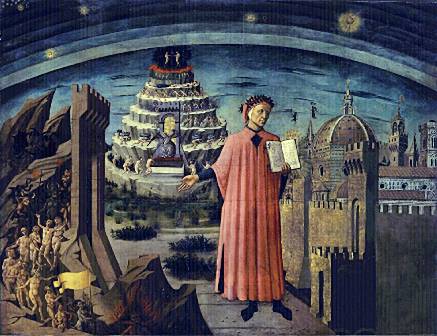
Dante Aligieri, also a poet. Probably a better poet than I, but I bet I'm taller than he was.

Terra Incognita Magazine is having a poetry reading in Greenwich Village next Sunday, and I will be one of their featured readers. If anyone is in New York this weekend, come on by. I will paste their announcement below:

Once again, in the wonderful, cozy and wine-sipping ambience of the Cornelia Street Cafe, we are having a reading promoting the current issue of Terra Incognita (#6) as well as the forthcoming issue, due out later this fall. The reading begins at 6pm. Entrance is $6.00 which does buy the happy ticket buyer a free drink at the bar as well as a wonderful hour of rich, innovative, ear-bending poetry. Please come and usher in the late spring /early summer with us on Sunday evening. The readers are talented and varied and their bios follow:

Terra Incognita at Cornelia Street Cafe
6pm
June 11th
Featuring:

Sima Rabinowitz
Liam Moore
EJ Antonio
Ron Drummond


Sima Rabinowitz is the author of The Jewish Fake Book, published in 2004 by Elixir Press, and Murmuration, a chapbook published this year by New Michigan Press. Her poetry column, "The View from First Avenue," appears in every issue of Dragonfire, the Webby-nominated magazine of culture, art, and politics from Drexel University. This year Sima received her first Pushcart nomination for poems that appeared in the journals Salamander and Hotel Amerika. She is pleased to have her work in Terra Incognita and looks forward to the new issue.

Liam Moore, a poet and fiction writer, was born in Salt Lake City in 1966. He has had work published in both print and online journals. Liam spent much of his adult life in Spain and Italy, and was probably up to no good. At the present, he is writing a history PhD dissertation on the use of religious language in eleventh- and twelfth-century Spanish royal charters at Columbia University. Some of his work can be found at http://geocities.com/trepanatus/. Poetry publications include: zafusy.com, Terra Incognita, Whiskey Island and roguescholar.com.

Ron Drummond's Why I Kick at Night was the winner of the 2004 Portlandia Press Competition. His poetry is represented in Penguin's textbook Literature as Meaning, the anthologies Poetry Nation, Poetry After 9.11, This New Breed and Saints of Hysteria, and in journals such as Northwest Review, Borderlands, Columbia Review, Global City Review, Phoebe, and Poetry New York. His translations, in collaboration with Guillermo Castro, of poems by Olga Orozco have appeared in U.S. Latino Review, Terra Incognita and Guernica. He has received writing fellowships from Ragdale Foundation, VCCA and Blue Mountain Center, and was one of the founding editors of Barrow Street.

E.J. Antonio resides in Mount Vernon, NY and is a founding committee member of and a volunteer poet for the Poetry Caravan, which brings readings and workshops into nursing homes, shelters and rehabilitation facilities. She attended the 2002 Writers Conference at Sarah Lawrence College as a Cave Canem NY Regional Fellow and was recently nominated for a Pushcart Prize. E.J. has appeared as a featured reader in the New York City / Westchester area at such venues as the Bronx Council of the Arts First Wednesday Series, Cornelia Street Cafe, The Hudson Valley Writers Association and the Harvard Club. Her work has been featured online at places such as Poetz.com, RogueScholars.com, and RainTiger.com, and has been published in Taj Mahal Review, the WarpLand Literary Journal, Let the Poets Speak an Anthology and en(compass) an Anthology. Her work is also forthcoming in A Gathering of the Tribes, Terra Incognita, and African Voices.

The Cornelia Street CafĂ© 
29 Cornelia Street, NYC 10014 
212-989-9319